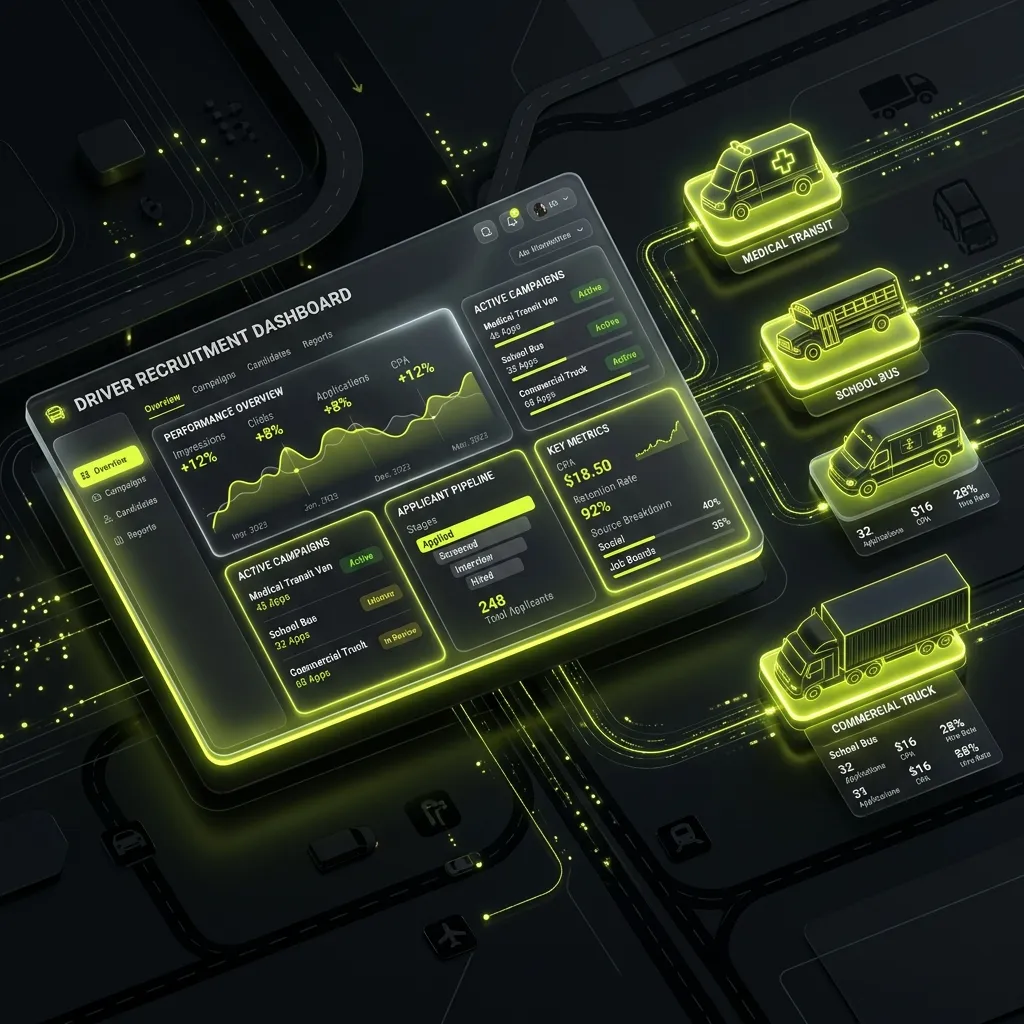
One of the biggest bottlenecks in transportation today is not finding demand. It is filling empty driver seats.
For many fleet operators, the problem is familiar. Contracts are there, vehicles are ready, and routes need to be covered — but hiring enough qualified drivers to keep the operation moving is still a challenge.
That pressure affects multiple segments of the industry. Whether you run a trucking company, a school transportation operation, or an NEMT fleet, you are competing for the same limited pool of licensed, dependable drivers.
When job boards start producing fewer qualified applicants, many operators look to social media ads. Social platforms can still be useful for employer branding and retargeting, but they are often less effective when the goal is to quickly generate applications from drivers who are ready to work now.
That is why we shifted our strategy toward Google Search Ads.
Instead of trying to interrupt people while they were scrolling, we focused on reaching drivers who were already looking for a new opportunity. That change helped our clients hire dozens of qualified CDL and NEMT drivers in less than 90 days.
Why Social Recruiting Got Harder
A few years ago, social media advertising offered a very precise way to promote driver openings. Employers could narrow audiences heavily and push recruiting campaigns to specific local pockets.
Today, recruiting campaigns on major social platforms come with more limitations. That is understandable from a compliance standpoint, but it also means advertisers have less control than they once did.
In practice, that often leads to broader targeting, more top-of-funnel traffic, and a lower percentage of applicants who are actually qualified and ready to move forward. For transportation companies, that can mean more time spent sorting through weak leads and fewer real interviews.
That does not make social media useless. It simply means it is often better suited for awareness, visibility, and remarketing than for urgent driver hiring.
Why Google Ads Worked Better
Google Search gave us something social ads could not: intent.
When someone searches for terms like "local CDL jobs near me" or "medical transportation driver jobs," they are not casually browsing. They are actively looking for work.
That allowed us to build campaigns around three things that mattered most:
- High-intent keywords. We aligned ad groups and ad copy around the exact searches drivers were already making.
- Local targeting. We focused on realistic commuting areas around the terminal or service region.
- Negative keywords. We filtered out traffic that did not match the role, such as searches related to long-haul work when the client needed local drivers.
That shift improved lead quality quickly. Instead of generating a large volume of weak applications, the campaign started producing a more manageable flow of drivers who were much closer to being hireable.
What Made the Funnel Convert
Traffic was only part of the solution. The landing page and follow-up process had to do their job too.
Here is what made the funnel work:
- Clear job details. We showed pay, schedule, vehicle type, and expectations upfront.
- Simple application flow. We used a short, mobile-friendly form instead of sending traffic to a long career portal.
- Basic qualification questions. We asked only the questions needed to filter serious applicants early.
- Fast follow-up. HR and dispatch were notified immediately so they could contact strong leads before those applicants disappeared.
That combination mattered more than most fleet operators expect. Even good traffic will underperform if the page is confusing or the callback happens too late.
What Fleet Operators Should Take Away
Social media still has value in a broader recruiting strategy. It can help reinforce your brand, stay visible in the market, and re-engage people who have already interacted with your company.
But when the goal is to put qualified drivers into seats as fast as possible, search intent is often the better starting point. Reaching people at the exact moment they are looking for a driving job is usually more efficient than trying to create interest from scratch.
If your fleet is relying only on job boards and broad recruiting campaigns, there is a good chance you are leaving qualified applicants on the table. A focused Google Ads campaign, paired with a fast and simple application funnel, can turn driver recruitment into a much more predictable system.
MarkItEasy builds growth systems for transportation companies that need both leads and drivers. If your fleet is ready to improve recruiting performance, contact us today to build a campaign and funnel designed to turn search demand into real hires.
Need a High-Converting Website?
Traffic is great, but conversions are what pay the bills. If your current website isn't turning visitors into booked calls, it's time for an upgrade.
Explore Our Web Design Services